
In This Article
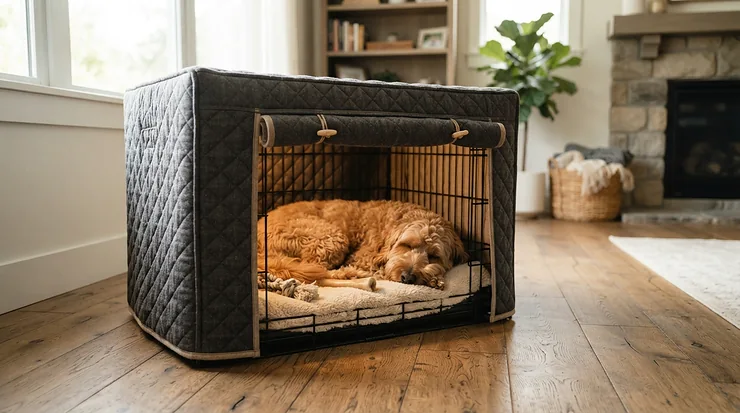
A wire crate is basically a glass aquarium for dogs. Your pup can see the mail carrier, the neighbor’s cat, the vacuum, the headlights sweeping across the ceiling at 9 p.m. Every one of those is a potential alarm bell. For a relaxed dog, it’s background noise. For a nervous one, it’s a 24/7 security-camera feed of things to panic about.
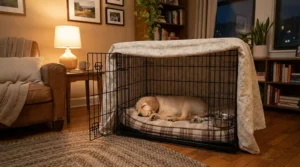
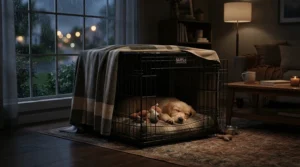
That’s why a wire crate cover for anxious dogs is one of the cheapest, most effective upgrades in dog gear. It doesn’t cure anxiety. Nothing made of polyester does. But it edits the visual chaos out of your dog’s day. Many dogs also settle faster once the crate becomes a quieter, darker, more enclosed space. Dogs descended from den-dwelling animals, and a crate that feels like a den often becomes the one place they relax.
There’s a catch, though. A cover that traps heat, blocks all airflow, or gets yanked through the bars can turn a calming tool into a hazard. Plenty of owners have learned that the hard way. As this overview of crate-covering pros and cons notes, covering a crate can help a dog feel secure, but it can make others feel trapped, so airflow and your dog’s individual temperament both matter.
So here’s what we’re doing. This guide compares seven real, widely sold covers, interprets their specs in plain English, and covers the details that matter most: a dark crate cover for noise sensitive dogs, a calming cover for wire dog kennel setups, how to build a den like environment, what sound dampening actually delivers, and how fabric breathability keeps everything safe. Prices below are ranges only, and they change often. Always check current pricing before you buy.
Quick Comparison Table: 7 Covers at a Glance
| Product | Material / Key Feature | Approx. Price Range | Best For |
|---|---|---|---|
| MidWest QuietTime Crate Cover | 100% polyester, roll-up flaps | Roughly $10–$35 by size and retailer | First-time cover buyers |
| GORILLA GRIP Dog Crate Cover | Mesh windows, adjustable closures | Roughly $25–$55 by size | Dogs who need adjustable airflow |
| MidWest QuietTime Defender Crate Cover | Teflon-treated stain-resistant fabric | Mid-$30s and up by size | Messy or accident-prone dogs |
| Seamander Dog Crate Cover | Waterproof, windproof exterior | Budget to mid-range | Garages, porches, drafty rooms |
| K9 Ballistics Tough Rip-Stop Crate Cover | Rip-stop construction | Higher price tier | Scratchers and fabric-pullers |
| Mud River Dixie Insulated Kennel Cover | Insulated heavy-duty build | Mid-to-premium | Noise and temperature buffering |
| Precision Pet Indoor/Outdoor Crate Cover | Rugged indoor/outdoor build | Premium | Long-term, heavy-use households |
Looking at the table, the MidWest QuietTime Crate Cover is the lowest-risk way to find out whether your dog even likes a covered crate. If your dog is a fabric-puller, though, the K9 Ballistics Tough Rip-Stop Crate Cover and Precision Pet Indoor/Outdoor Crate Cover justify their higher cost by lasting longer. Owners dealing with thunder, fireworks, or a noisy street should lean toward the thicker, insulated Mud River Dixie Insulated Kennel Cover, since heavier fabric is the closest thing to genuine sound dampening in this category.
💬 Just one click — help others make better buying decisions too!😊
Top 7 Wire Crate Cover for Anxious Dogs Picks: Expert Analysis
Every product below is a real, currently sold cover. The analysis draws on manufacturer specs, retailer listings, and published roundups. Where I couldn’t verify a large body of independent reviews for a product, I say so instead of guessing.
1. MidWest QuietTime Crate Cover — cheapest way to test the den idea
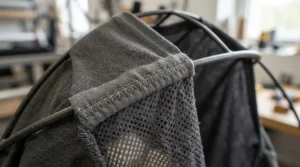
This is the budget workhorse of the category. It’s a 100% polyester cover with hook-and-loop tabs that secure the flaps, and each side can be rolled up and tucked on top of the crate.
Those flaps matter more than they sound. A nervous dog often wants the front closed at night but open during the day, and flap-based design lets you adjust without removing the whole cover. It also fits one-, two-, and three-door crates, and the plastic pan can slide out while the cover stays put.
Based on the spec comparison, it’s best for dogs who are mildly nervous or simply easily distracted. One retailer listing shows a rating of roughly 4.4 stars from a couple hundred reviews, and the manufacturer’s own product page lists a lower average of around 3.8–4.0 on a smaller review pool. A common thread in user feedback is that some dogs sleep deeply once the cover is down. Another reviewer reported that a separation-anxious dog pulled the fabric through the bars. If that sounds like your dog, skip ahead to the heavy-duty options.
Pros:
- ✅ Roll-up flaps adjust light and airflow easily
- ✅ Machine washable and dryer friendly
- ✅ Fits one-, two-, and three-door crates
Cons:
- ❌ Thin polyester lets some light through
- ❌ Easy for determined dogs to pull inside
Price range: roughly $10–$35 depending on size and retailer. For a first experiment, the value is hard to beat.
2. GORILLA GRIP Dog Crate Cover — mesh windows for adjustable airflow
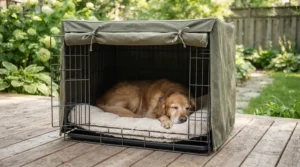
The GORILLA GRIP Dog Crate Cover is built around mesh windows at the front and back that can be opened or closed, plus adjustable closures along the seam for extra ventilation. It comes in sizes from roughly 24 to 48 inches and in several colors and prints.
What does that mean in practice? Anxious dogs vary wildly in what calms them. Some need total darkness. Others get more stressed when they can’t see you at all. Mesh windows let you dial in a middle ground: keep the sides dark but leave the front window open so your dog can still spot you across the room.
My honest read: this is the smartest choice for dogs with mild separation worries who need to keep eye contact. It’s also a good pick for warm homes, because the vents lower the odds of a stuffy crate. Independent review volume was harder to verify across sizes, so check the current ratings on the specific size you’re buying.
Pros:
- ✅ Mesh windows balance privacy and visibility
- ✅ Adjustable seam closures boost ventilation
- ✅ Wide range of sizes and colors
Cons:
- ❌ Mesh windows let in more light and sound
- ❌ Less suited to hardcore fabric-pullers
Price range: roughly $25–$55 depending on size. Reasonable value for the flexibility.
3. MidWest QuietTime Defender Crate Cover — stain-fighting fabric for messy nights
The MidWest QuietTime Defender Crate Cover is the same basic idea as the standard cover, upgraded with Teflon fabric protection. The manufacturer says it fends off spills, splashes, and accidents. It keeps the hook-and-loop tabs and is machine washable and dryer friendly. It comes with five flaps: front, sides, back, and top.
Why does stain resistance belong in an anxiety guide? Because stressed dogs often have accidents, drool heavily, or knock over water bowls. A cover that wipes clean means you’ll actually wash it, and a clean cover is one your dog keeps associating with a pleasant, odor-free space.
On paper, it suits puppies, seniors, and nervous dogs prone to accidents. Reviewer sentiment on the Defender line specifically was limited in my research (the manufacturer’s page showed no reviews at the time), so expect similar behavior to the standard cover, with easier cleanup.
Pros:
- ✅ Teflon-treated fabric resists spills and stains
- ✅ Five-flap design adjusts light and airflow
- ✅ Machine washable and dryer friendly
Cons:
- ❌ Costs more than the standard version
- ❌ Still lightweight against determined chewers
Price range: mid-$30s and up depending on size. Worth it only if accidents are a real issue in your house.
4. Seamander Dog Crate Cover — weatherproof shield for drafty spaces
The Seamander Dog Crate Cover is marketed as durable, waterproof, and windproof, and it fits one-, two-, and three-door steel wire crates across a range of sizes. That’s a different mission from the soft indoor covers above.
The practical translation: if your crate lives in a garage, sunroom, mudroom, or near a drafty door, this style blocks wind and splashes. The tradeoff is breathability. Waterproof, windproof fabric is inherently less breathable than plain polyester, so you must keep vents or flaps open and never fully seal the crate.
I couldn’t verify a deep pool of independent reviews, so treat this as a decent budget option for environmental protection, not a proven anxiety specialist. If your dog’s trigger is cold drafts or rain noise, it could help. If the trigger is household bustle, a softer, more ventilated cover is a safer bet.
Pros:
- ✅ Blocks wind and light moisture
- ✅ Fits one-, two-, and three-door crates
- ✅ Typically affordable for its size
Cons:
- ❌ Less breathable than standard fabric covers
- ❌ Limited verified review data for anxiety use
Price range: budget to mid-range; check current price for your size. Good for garages, risky for stuffy rooms.
5. K9 Ballistics Tough Rip-Stop Crate Cover — built for dogs that fight the fabric
The K9 Ballistics Tough Rip-Stop Crate Cover is designed to resist tearing, and one published roundup picked it as the best waterproof option. The same roundup noted it has a higher price point and that some dogs might still manage to tear it.
Rip-stop fabric uses a reinforced weave so a small tear doesn’t zip across the whole panel. For an anxious dog who paws, chews, or drags covers through the bars, that’s the difference between a cover lasting a month and lasting years. It also prevents the real danger: a shredded cover can mean swallowed fabric.
What reviewers and roundups suggest is that this suits owners who’ve already destroyed a standard cover. Nothing is truly indestructible, though, and a panicking dog can defeat almost any fabric. Dogs who attack the crate itself may need a sturdier crate and a behaviorist, not just a better cover.
Pros:
- ✅ Rip-stop weave resists spreading tears
- ✅ Water-resistant for messy or outdoor use
- ✅ Longer lifespan for tough dogs
Cons:
- ❌ Higher price than basic polyester covers
- ❌ Not guaranteed against determined chewers
Price range: higher-tier, often well above basic covers. Pays off if you’d otherwise replace cheap covers repeatedly.
6. Mud River Dixie Insulated Kennel Cover — the closest thing to real sound dampening
The Mud River Dixie Insulated Kennel Cover is a heavy-duty, insulated cover that a published roundup selected as its best insulated option. Insulation is the key word here, because thicker layered material does more to muffle outside noise and hold temperature steady.
Here’s what the spec sheet won’t tell you outright: insulation cuts both ways. It softens sudden sounds like doorbells, passing traffic, and neighborhood barking, and it keeps a crate warmer in winter. It also holds heat, so it’s a poor fit for warm rooms, thick-coated breeds, or summer.
I’d recommend it for noise-sensitive dogs in cool or drafty homes, with careful temperature monitoring. Because it’s thick, avoid closing all sides. Independent review data was limited in my research, so check current user ratings for your size.
Pros:
- ✅ Insulated layers muffle outside noise
- ✅ Holds warmth in cool rooms
- ✅ Heavy-duty build for daily use
Cons:
- ❌ Can overheat dogs in warm environments
- ❌ Bulkier to wash and store
Price range: mid-to-premium. Strong value for noise-sensitive dogs in cool climates.
7. Precision Pet Indoor/Outdoor Crate Cover — premium build for long-term use
The Precision Pet Indoor/Outdoor Crate Cover was named the overall best in one published roundup, though the same review flagged two downsides: it isn’t as versatile as covers with multiple openings, and it has a very high price compared with the rest.
In practice, that tells you who it’s for. This isn’t an experiment purchase. It’s for households with a dog who’s proven they love a covered crate, and who want something that survives years of washing, travel, and daily use. The lack of multiple openings means less fine-tuning of airflow, so ventilation design matters even more.
If you’re still testing whether covers help, start cheaper. If you already know the answer is yes, a durable cover can lower the long-run cost per month of use.
Pros:
- ✅ Rugged construction for heavy daily use
- ✅ Works indoors and outdoors
- ✅ Highly rated in published roundup
Cons:
- ❌ Premium price compared with competitors
- ❌ Fewer openings for custom airflow
Price range: premium tier. Best viewed as a multi-year purchase.
Practical Guide: Building a Den Like Environment Around the Cover
A cover alone is just fabric. The den like environment comes from how you introduce it, and rushing this step is the most common reason dogs reject covers.
Week one: introduce, don’t impose. Drape the cover over the top of the crate only, with all sides rolled up. Let your dog explore, sniff, and eat treats near it. Add a flap each day as your dog stays relaxed. Per this guidance on covering a dog’s crate, even a dog comfortable in the crate shouldn’t get a cover added with no warm-up.
Build the interior. Add a washable bed or mat, a safe chew toy, and an item that smells like you, such as an old t-shirt. Keep water accessible if the crate time is long. Darkness alone doesn’t create calm. Comfort does.
Set the room. Place the crate against a wall or in a corner, away from windows and busy doorways. Dogs usually relax more with a wall behind them because it reduces the angles things can approach from.
Test the airflow. At least one side should stay open or mesh-ventilated, as the same guidance emphasizes. Put your hand inside after 30 minutes. If it feels warm or stuffy, open more flaps.
Common first-30-day mistakes:
- Closing all sides on day one
- Using the cover as punishment
- Leaving loose fabric inside the crate
- Skipping washes, which lets odors build up
If your dog panics at any stage, step back a level. Progress with anxious dogs is rarely a straight line, and that’s normal.
Problem → Solution Guide: When the Cover Isn’t Working
Most cover failures are fixable. Here are the five most common problems.
1. My dog pulls the cover through the bars. This is the most frequently reported issue in owner feedback. Switch to rip-stop, such as the K9 Ballistics Tough Rip-Stop Crate Cover, and use clips or ties to keep fabric taut. Don’t leave an unsupervised dog with a cover they’re actively destroying, because swallowed fabric is a real hazard.
2. The crate gets too warm. Open the flaps, switch to the vented GORILLA GRIP Dog Crate Cover, or move the crate away from sunlight and heating vents. Avoid insulated styles like the Mud River Dixie Insulated Kennel Cover in warm rooms.
3. My dog still barks at every sound. A cover reduces visual triggers, but sound passes through fabric. Add white noise or soft music, and consider thicker material. If barking is intense, talk to a trainer or veterinarian.
4. Light still leaks through. Thin polyester lets some light seep in, and one reviewer of a standard cover mentioned adding a blanket over it. Layer a heavier throw on top, but keep an opening.
5. Accidents keep soiling the cover. The MidWest QuietTime Defender Crate Cover, with its stain-resistant fabric, is worth considering. Wash covers regularly.
If none of these solve things, the issue is probably not the cover. Clinical separation anxiety calls for behavior training and professional guidance, and sometimes medication prescribed by a vet.
Real-World Scenarios: Matching the Right Cover to the Right Dog
Scenario 1: The apartment puppy with window-watching syndrome. A 20-pound puppy in a second-floor apartment barks at every passerby. Budget is tight. The MidWest QuietTime Crate Cover is the logical start. It blocks visual triggers cheaply, and if the puppy outgrows it or hates it, you’ve lost very little.
Scenario 2: The rescue with thunder phobia. A rescued lab mix trembles during storms. The owner lives in a cool climate and keeps the crate in a quiet back room. The Mud River Dixie Insulated Kennel Cover is worth considering for its sound-muffling bulk, paired with white noise and a safe den-style setup.
Scenario 3: The escape artist in the garage. A large dog is crated in a drafty garage workspace and has shredded two covers. The K9 Ballistics Tough Rip-Stop Crate Cover or Precision Pet Indoor/Outdoor Crate Cover fits this environment, and the Seamander Dog Crate Cover could work for budget-conscious wind protection, as long as vents stay open.
In each case, the best cover isn’t the “best” product overall. It’s the one that matches the dog’s trigger, the room’s climate, and the owner’s budget.
What Is a Wire Crate Cover for Anxious Dogs?
A wire crate cover for anxious dogs is a fabric cover that drapes over a wire dog crate to reduce visual stimulation, dim light, and create a quieter, den-like space. Good designs include adjustable flaps or mesh vents so airflow stays safe. It supports calm behavior but doesn’t treat clinical anxiety on its own.
How to Choose a Wire Crate Cover for Anxious Dogs
- Measure your crate’s outside dimensions. Sizing varies between brands, and one retailer notes that 30-inch crates come in both 19-inch and 21-inch widths.
- Decide how dark you need it. Visual triggers call for opaque fabric. Dogs who need to see you do better with mesh windows.
- Check fabric strength. Pullers and chewers need rip-stop or reinforced weaves, not thin polyester.
- Prioritize ventilation. Look for mesh panels or roll-up flaps, and never seal the crate fully.
- Consider your climate. Insulated styles suit cool rooms. Lightweight fabric suits warm ones.
- Think about washing. Machine-washable covers get washed. Hand-wash-only ones don’t.
- Match the budget to the dog. Test cheaply first, then upgrade if the cover works.
Dark Crate Cover for Noise Sensitive Dogs: What Darkness Does and Doesn’t Do
Let’s be clear about what a dark crate cover for noise sensitive dogs actually accomplishes. Darkness doesn’t silence a thunderclap. What it does is remove the flashes, shadows, and movement that often arrive alongside the noise, which can make the whole event feel less threatening.
For dogs who react to sight-plus-sound combinations (a doorbell and a stranger’s silhouette, or thunder and lightning), darkness cuts half of the trigger. That alone can reduce arousal. Dogs often respond to the combined effect: less to see, less to scan, more reason to lie down.
Fabric choice drives how dark a cover gets. Thin polyester diffuses light rather than blocking it, which is why one owner reported layering an extra blanket. Heavier or multi-layer options, like the Mud River Dixie Insulated Kennel Cover, block more. Some covers are marketed as “blackout,” but verify claims carefully since there’s no universal standard.
Pair darkness with predictable routines. A dark crate at the same bedtime hour sends a powerful “now we rest” cue. And always keep a vented side available, because a dog who can’t breathe comfortably will not feel safe, no matter how dark the space is.
Calming Cover for Wire Dog Kennel: Why Enclosure Feels Safer
A calming cover for wire dog kennel setups works because it changes the geometry of the space. An open wire crate has 360-degree sightlines, which means your dog has to monitor everything. A covered crate reduces the “threat surface” to a window or two.
The manufacturer language on covers like the MidWest QuietTime Crate Cover emphasizes this: den-like atmospheres can help reduce anxious behaviors such as barking and chewing. Roundups echo the same idea, noting that anxious dogs may benefit from a covered crate while some dogs simply dislike it. As this roundup of crate covers points out, not all dogs like covered crates, and that’s an important caveat.
Watch your dog’s body language the first few times. Relaxed signals include soft eyes, curled posture, and sighing. Stress signals include panting, pacing, whining, drooling, and scratching at the fabric. If you see stress, remove or open the cover and reassess. A calming cover only works if the dog actually finds it calming.
Consistency makes a big difference. Dogs learn that cover down equals rest time, which strengthens the effect over weeks.
Sound Dampening: What to Realistically Expect
Here’s the honest truth about sound dampening. A fabric crate cover is not soundproofing. Most covers will soften high-frequency, sharp noises slightly and do very little against low rumbles like thunder or bass music.
Why? Sound passes through lightweight fabric easily, and vents, which you need, create openings by design. Thick, insulated, or layered materials provide a noticeable muffling effect, but they still don’t approach acoustic panels. Manufacturers who use words like “soundproof” on listings are generally overselling.
A realistic strategy combines three things:
- Thicker fabric, such as an insulated cover
- Placement, away from televisions, doors, and street-facing walls
- Masking noise, like a fan, white noise machine, or calm music
Wire crates also create their own noise. A dog shifting inside rattles metal, and that clatter can startle a nervous dog further. A soft cover with a padded bed inside helps dull those self-generated sounds, which can matter more than outside noise.
For severe noise phobia, covers should be one layer in a broader plan that may include desensitization training, and veterinary guidance when needed.
Fabric Breathability: The Safety Feature You Can’t Skip
Fabric breathability is the line between a calming cover and a dangerous one. Dogs cool themselves mostly by panting, and a crate that traps hot, humid air makes that harder.
Here’s how the main materials compare:
- Lightweight polyester (like the MidWest QuietTime Crate Cover): breathes reasonably well, and roll-up flaps boost airflow.
- Mesh-window designs (like the GORILLA GRIP Dog Crate Cover): best airflow, since vents can be opened or closed.
- Waterproof or windproof fabrics (like the Seamander Dog Crate Cover): block moisture but breathe less, so keep openings active.
- Insulated or heavy-duty fabrics (like the Mud River Dixie Insulated Kennel Cover): hold heat, so use in cool rooms and monitor temperature.
The rule that veterinary-style guidance on partial covering repeats is simple: never fully cover the crate, and leave at least one side open. Check the interior temperature, and watch for heavy panting, restlessness, or damp fur.
Puppies, seniors, brachycephalic breeds (like bulldogs and pugs), and thick-coated dogs overheat faster, so favor more ventilation for them. When in doubt, open another flap.
Wire Crate Cover vs Alternatives: Blankets, Soft Crates, and Plastic Kennels
Plenty of owners start with a bedsheet. Fair enough. But it’s worth comparing options honestly.
| Option | Darkness | Airflow Control | Durability | Best For |
|---|---|---|---|---|
| Bedsheet or blanket | Medium | Poor (slips, bunches) | Low | Quick trials |
| MidWest QuietTime Crate Cover | Medium | Good (roll-up flaps) | Medium | Budget-friendly daily use |
| GORILLA GRIP Dog Crate Cover | Medium-high | Very good (mesh) | Medium | Adjustable visibility |
| K9 Ballistics Tough Rip-Stop Crate Cover | High | Moderate | High | Pullers and chewers |
| Plastic travel kennel | High | Limited | High | Travel, not home setups |
The written analysis matters more than the grid. A blanket is free, but it slides, bunches, and gets pulled inside, creating a chewing hazard. Purpose-made covers stay in place with hook-and-loop tabs, offer controlled airflow, and wash easily. Plastic kennels are naturally den-like, but some anxious dogs feel more enclosed in them, and switching crate types mid-training can set you back.
For most owners already using a wire crate, a fitted cover is the simplest upgrade with the best control.
Common Mistakes When Buying a Wire Crate Cover for Anxious Dogs
Buying the wrong size. Brands differ by an inch or two, and a loose cover creates sagging fabric your dog can grab.
Choosing darkness over airflow. A pitch-black crate that overheats is worse than a dimly lit, ventilated one.
Ignoring the chewer problem. If your dog already destroys bedding, a thin cover will end up shredded and possibly swallowed.
Skipping the introduction. Slapping a cover on a worried dog can create a negative association with both the cover and the crate.
Expecting a cure. A cover reduces triggers. It doesn’t treat panic disorders, and relying on it alone can delay proper help.
Buying on a single feature. “Soundproof” and “blackout” labels are often marketing. Judge by fabric weight, vents, and real-world feedback.
Using covers with dogs who genuinely hate them. Some dogs feel trapped. If yours is trembling or frantic under cover, remove it.
Long-Term Cost and Maintenance: What You’ll Really Spend
The sticker price isn’t the real cost. Total cost of ownership depends on lifespan, washing, and whether your dog destroys it.
| Tier | Example | Approx. Range | Likely Lifespan Profile |
|---|---|---|---|
| Budget | MidWest QuietTime Crate Cover | $10–$35 | Fine for calm dogs, short-lived for pullers |
| Mid | GORILLA GRIP Dog Crate Cover, MidWest QuietTime Defender Crate Cover | $25–$55 | Solid for daily use |
| Premium | Precision Pet Indoor/Outdoor Crate Cover, K9 Ballistics Tough Rip-Stop Crate Cover | Higher tier | Best for long-term, tough use |
The honest math: a cheap cover replaced three times costs more than one durable cover that lasts years. But if you’re unsure your dog likes covers, the budget option limits your regret.
For maintenance, wash covers every few weeks, or immediately after accidents. Most listed covers here are machine washable, though the thicker insulated styles may need more care. Check hook-and-loop tabs for lint buildup, inspect seams for fraying, and replace covers with holes. Ripped fabric is a swallowing risk.
Prices change constantly, so check current pricing and availability before buying.
FAQ: Wire Crate Cover for Anxious Dogs
❓ Can a wire crate cover for anxious dogs make separation anxiety worse?
❓ How much of the crate should I cover?
❓ Is a calming cover for wire dog kennel setups safe for puppies?
❓ Do thicker covers work better for noise sensitive dogs?
❓ How often should I wash a dog crate cover?
Conclusion: Pick the Cover That Fits Your Dog’s Trigger, Not Just the Hype
A wire crate cover for anxious dogs won’t fix everything, but it quietly fixes a lot. It trims the visual noise, adds a sense of enclosure, and turns an exposed metal cage into something closer to a den. The best choice depends on your dog. For a first test, the MidWest QuietTime Crate Cover is a low-risk entry. If your dog wants airflow and visibility control, the GORILLA GRIP Dog Crate Cover earns a look. For fabric-pullers, the K9 Ballistics Tough Rip-Stop Crate Cover and Precision Pet Indoor/Outdoor Crate Cover are the sturdier bets. Noise-sensitive dogs in cooler homes may appreciate the bulk of the Mud River Dixie Insulated Kennel Cover. For accident-prone dogs, the MidWest QuietTime Defender Crate Cover makes cleanup easier, and the Seamander Dog Crate Cover handles drafty spaces when you keep the vents open.
Whatever you pick, introduce it slowly, keep airflow open, and pay more attention to your dog’s body language than to any product claim. If anxiety is severe or you see destructive panic, bring in a veterinarian or certified behaviorist. For more crate-cover options and guidance, this detailed buying guide is a useful companion read.
Recommended for You
- [Add your blog post link 1]
- [Add your blog post link 2]
- [Add your blog post link 3]
Disclaimer: This article contains affiliate links. As an Amazon Associate, I earn from qualifying purchases. If you purchase products through these links, we may earn a small commission at no additional cost to you.
✨ Found this helpful? Share it with your friends! 💬🤗
